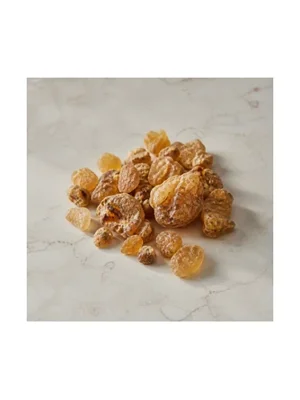
Pistachio Tree Resin
Note Profile
About
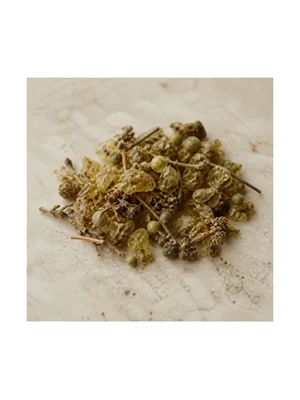
Resin from the pistachio tree. It is balsamic and turpentine-sharp, with a green edge on top and a warm sweetness underneath. No source describes the resin of Pistacia vera itself. The picture here is built from its two closest resin-producing relatives, mastic and terebinth, which trade sources treat as separate materials.
Scent Profile
Amber_resinous leads and every source states it: 'Resinous, turpentine-sharp, and warmly balsamic', 'balsamic, sweet coniferous-turpentine-like', 'warm, spicy woody & balsamic undertones', 'green and resinous... with warm balsamic'. Four independent trade sources use the word, which makes it the one claim here that is not in doubt as a genus character. Green is the second word in three of those four descriptions, and Rising Sun Botanicals sharpens it to 'fresh, astringent green and resinous, Galbanum like'. Dry_woody is the 'woody tonalities' and 'spicy woody' that two sources give. Aromatic_herbal is the terpene lift, called 'bright, heady, terpene-like herbal'. Cooling_mentholic is the 'sharp camphor-like aroma when newly distilled', and note the qualifier: that is the freshly distilled oil, not a lump of tapped resin, so it may be too high for the resin itself. Below the line: sweet_vanillic for the 'soft, balsamic warmth' underneath, earthy from Eden's first word, warm_spice for 'spicy woody', mineral for the dry astringency, and citrus for the terpene brightness.
ScentWheel
Read off the wheel, not a label applied to the note.
Origin
Exuded sap of Pistacia vera, the pistachio tree, in the cashew family. Its genus is the source of two traded resins: mastic from Pistacia lentiscus, tapped on Chios, and terebinth from Pistacia terebinthus. Pistachio itself is grown for the nut. No source found claims it is tapped for resin at commercial scale. Tsokou et al. 2007 note that earlier work on Pistacia vera 'concern mainly the resin of the plant' but never say what that resin smells like.
Usage in Perfumery
Used as a Mediterranean resin note, drier and sharper than a labdanum and less sweet than a benzoin. It gives an incense or fougere base a turpentine cut, and it sits under conifer and herbal accords without adding the vanilla weight of a true balsam.
Similar Notes
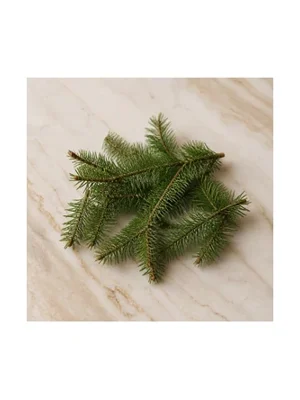
Perfumes featuring Pistachio Tree Resin
A selection of reviewed perfumes where Pistachio Tree Resin appears prominently.
No perfumes featuring this note have been reviewed yet. Check back soon.