La Fée Absinthe
Extrait
Ava Luxe
Statement
Note Profile
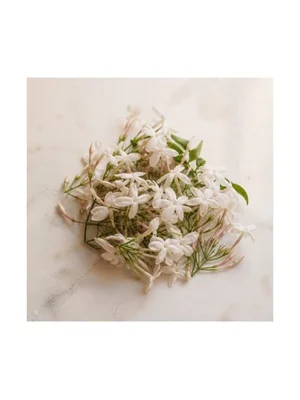
Jasminum auriculatum, called juhi or mullai, is the third of the three commercially extracted jasmines. It smells the least like the familiar jasmine. It opens green and grassy rather than floral, with a frankincense-like, balsamic warmth that grandiflorum and sambac do not have. The waxy, creamy white-flower body is there, but it sits behind the green.
Green and grassy first, piercing and wild, with a hint of green tea. Once the grassy opening settles, a waxy, creamy white-floral body of jasmine and gardenia comes through. It is less indolic than sambac. A herbal edge runs through it, and it is the most herbaceous of the three commercial jasmines. Underneath sits a resinous, balsamic warmth close to frankincense, with a tropical, grassy depth. Faint touches of tropical fruit, incense smoke and suede sit at the edges.
Read off the wheel, not a label applied to the note.
Tap a perfume to see where Jasminum Auriculatum sits in it. The rest of the picture goes grey
Solvent extraction of the flowers of Jasminum auriculatum (Oleaceae), grown commercially in south India alongside J. sambac and J. grandiflorum. Concrete yields run from 0.28 to 0.36 per cent, and the absolute is drawn from the concrete. Named constituents include indole, benzyl benzoate, methyl anthranilate and benzyl alcohol.
A green-floral modifier, used in traces and not as a soliflore. It lifts white-floral accords out of the familiar. It brings jungle and tropical-green effects to forest and exotic themes, and it bridges florals into incense. It pairs with tuberose, ylang-ylang, gardenia, champaca and frankincense. It lasts more than 240 hours on a smelling strip. Too much overpowers a blend.
Perfumers known for using Jasminum Auriculatum include
Sultan Pasha
A selection of reviewed perfumes where Jasminum Auriculatum appears prominently.
New finds, honest verdicts, and price drops.
No spam. Unsubscribe anytime. See our privacy policy.