Kyphi
Note Profile
About
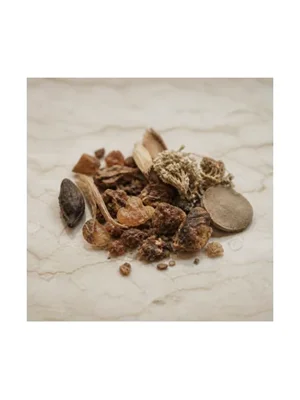
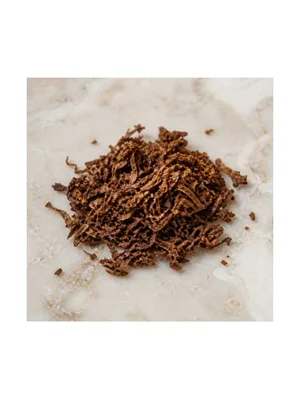
Kyphi is a compound temple incense, not a single material. It smells honeyed and resinous, with wine-soaked dried fruit over warm spice and a smoky, woody finish.
Scent Profile
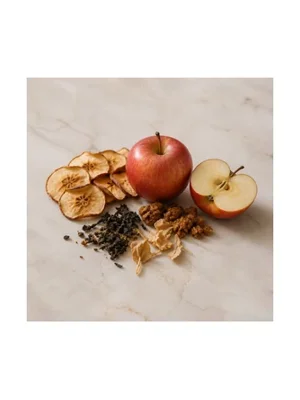
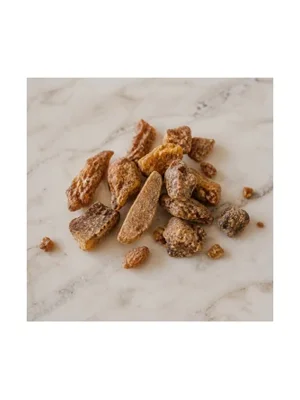
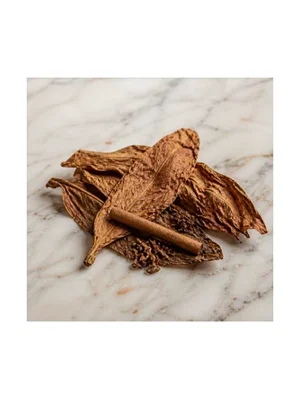
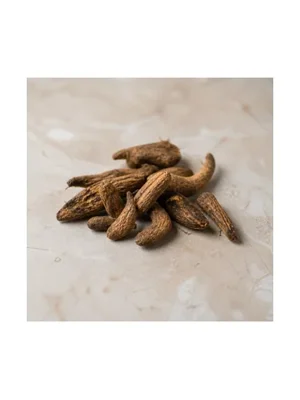
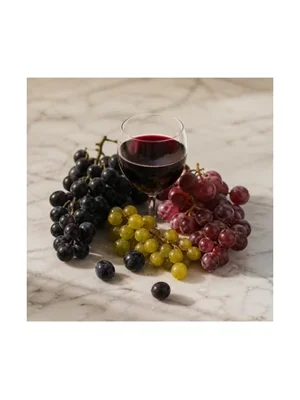
Amber_resinous leads, and it is the one facet every source names. Premiere Peau opens with 'Warm, resinous, honeyed-spicy with a dried-fruit sweetness' and closes with a 'persistent balsamic-resinous residue'. Honeyed is next because Scents of Earth puts it first in time: kyphi 'initially emits rich, deep, sweet notes of wine, honey and the honeycomb'. Warm_spice is the 'sweet, spicy and sensual' character of one source and the 'rich, spicy, and mysterious' of another, carried by cinnamon and cassia in most recipes. Smoky is not an inference: the material only exists as smoke, described as 'smoldering on temple coals'. Fruity is the raisins and dried fruit named by both trade sources. Boozy is the wine, named by both, and it is a real ingredient rather than a metaphor. Creamy_woody is the sandalwood of the finish, where Scents of Earth places 'dominant, finishing, notes of exotic woods; sandal and precious aloes'. Sweet_vanillic is the balsamic sweetness that keeps it, in Premiere Peau's words, on the benzoin side of frankincense. Dry_woody is the aloeswood and vetiver of that same finish, split from the sandalwood because they are different woods doing different work. Below, fresh_spice is the ginger and juniper berries of the middle, earthy is the vetiver, mineral is the hot coal, and powdery and tobacco_hay sit at trace with wide spreads because no source states either.
ScentWheel
Read off the wheel, not a label applied to the note.
Origin
Kyphi is an ancient Egyptian incense burnt on coals. Recipes survive in temple inscriptions and in Dioscorides and Galen. Wikipedia records sixteen ingredients in the Egyptian recipes and ten in Dioscorides. The shared core is raisins, wine and honey bound with myrrh and frankincense, plus spices and resins that vary by recipe. Galen describes the result 'rolled into balls and placed on hot coals to give a perfumed smoke'. Every kyphi sold today is a modern reconstruction of one of those recipes, so the material is a formula rather than an extract.
Usage in Perfumery
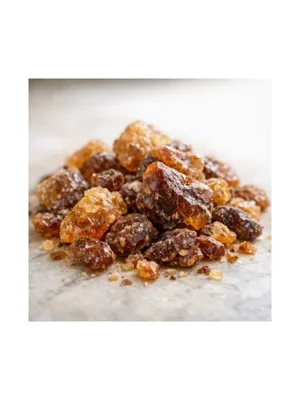
A base accord. It is used where a fragrance wants incense that reads sweet and edible rather than austere. Premiere Peau places it between two neighbours ScentPrism already holds: 'Less austere than pure frankincense, less sweet than benzoin.' It sits with myrrh, frankincense, labdanum, sandalwood, dried fruit and honey accords.
Similar Notes
Perfumes featuring Kyphi
A selection of reviewed perfumes where Kyphi appears prominently.
No perfumes featuring this note have been reviewed yet. Check back soon.