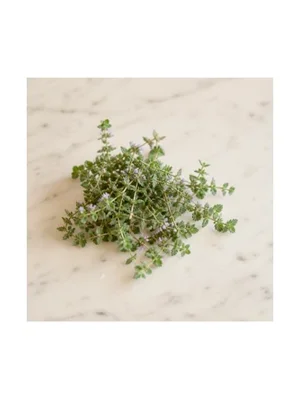
Mexican Mint
Note Profile
About
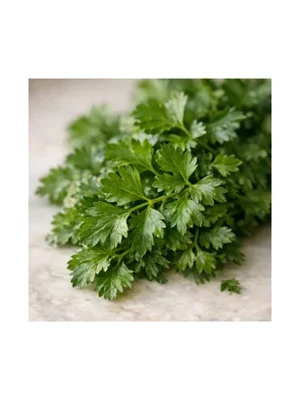
Not a mint. Plectranthus amboinicus, grown and sold worldwide as Cuban oregano, Spanish thyme or Indian borage - 'Mexican Mint' is one more common name on a plant that smells of oregano, not of menthol or carvone.
Scent Profile
Aromatic_herbal leads by a wide margin. Every source that describes the smell independently reaches for oregano: the plant is grown and sold specifically because crushing it gives 'a very strong fragrance of oregano' (NC State Extension), and it is used as a substitute for oregano in cooking for exactly that reason. The chemistry backs the description directly: carvacrol is described by The Good Scents Company as 'spice woody camphor thymol' and, in a cited Perfumer & Flavorist note on the same page, 'spicy, cooling, thymol-like, herbal and camphoreous with smoky nuances'. Warm_spice is that same carvacrol/thymol phenolic warmth, the character this vocabulary already gives oregano (0.52), marjoram (0.45) and ajowan (0.48), all dominated by the identical pair of compounds. Dry_woody and earthy are carvacrol's own woody-earthy secondary character, held low because no source names them as prominent. Cooling_mentholic is kept to a bare: one low-reliability gardening blog claims the plant reads as camphor-and-menthol first, nicknaming it the 'Vicks plant', but every GC-MS study fetched for this dossier found no significant menthol, camphor or menthone, only a trace of 1,8-cineole (up to 5.45% in one analysis) - so the spread on this facet is wide rather than the value being zeroed, because the claim is real but unconfirmed by the chemistry. Green is the plain crushed-leaf note under the phenolics.
ScentWheel
Read off the wheel, not a label applied to the note.
Origin
Plectranthus amboinicus (synonym Coleus amboinicus), a semi-succulent Lamiaceae native to southern and eastern Africa, now naturalised throughout the tropics and sold under at least seven English common names including Cuban Oregano, Caribbean Oregano, French Thyme, Spanish Thyme, Indian Borage, Soup Mint and Mexican Mint (NC State Extension Plant Toolbox). Independent GC-MS studies of its essential oil consistently find carvacrol and/or thymol as the dominant volatiles, though the ratio swings widely by region and growing conditions: carvacrol from 14% to 90.55% across surveyed studies, thymol from 7.2% to 61.5%, with gamma-terpinene, p-cymene and beta-caryophyllene as recurring minor constituents.
Usage in Perfumery
Used as a fresh substitute for true oregano (Origanum vulgare) in Caribbean, Filipino and South Indian cooking, and for the same oregano-thyme character in fragrance where an unusual, non-Mediterranean-sourced phenolic herb note is wanted. Not a substitute for a mint note: it carries almost none of the cooling or sweet character that defines Mentha oils.
Similar Notes
Perfumes featuring Mexican Mint
A selection of reviewed perfumes where Mexican Mint appears prominently.
No perfumes featuring this note have been reviewed yet. Check back soon.