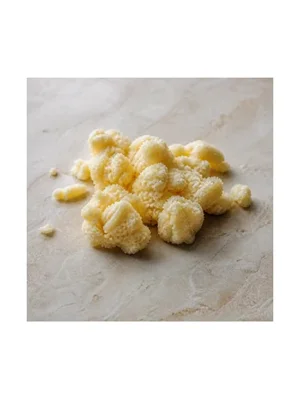
Mousse de Saxe
Note Profile
About
Mousse de Saxe is a compounded perfumery base, not a single material and not a moss. De Laire built it in the late 19th century from alpha-isomethyl ionone, oakmoss absolute, isobutyl quinoline, bourbon geranium oil, vanillin and anisic aldehyde. It smells of bitter leather laid over powdered violet, with a dusty chypre body underneath. The name is misleading twice over. Premiere Peau states it plainly: it does not smell like moss, nor like Saxony.
Scent Profile
Leather leads and three sources agree on it. Scentspiracy describes the isobutyl quinoline that carries it as dry, leathery, warm, tobacco-like and ink-like. Premiere Peau calls the same character bitter and almost medicinal, drier and greener than castoreum, more biting than labdanum. Under the leather sits mossy_chypre from the oakmoss absolute, which Premiere Peau says emerges as the leather recedes, and Perfume Shrine describes as a dark, sweetish, mossy-woody powdery aspect. Powdery is nearly level with it and comes from two ingredients at once, the alpha-isomethyl ionone that pushes the base toward violet-wood and the anisic aldehyde that rounds the sharp edges. Animalic is next. ScenTree leads its own descriptor list with it, and Perfume Shrine names a musk and leather background of animalic character, though no animal material is present. Sweet_vanillic is the vanillin, which Premiere Peau says becomes dominant in the drydown and reads as a faint sweetness of dried tonka beans. Earthy is ScenTree's third term and Perfume Shrine's opening word for the whole family of nineteenth-century moss bases. Floral is the violet from the ionone plus the rosy-metallic brightness of the bourbon geranium, which Premiere Peau says fades to a faint rosy haze. Amber_resinous is the labdanum axis the base reinforces and the warm-amber family placement both trade sources give it. Green is the bracing, cutting freshness Perfume Shrine attributes to the quinolines, and the reason Premiere Peau calls the leather greener than castoreum. Dry_woody is the violet-wood territory the ionone opens and the woody nuances Scentspiracy lists for the quinoline. Below those, tobacco_hay and smoky and carry the tobacco-like and ink-like edge Scentspiracy names, and clean_musk carries Perfume Shrine's musk background.
ScentWheel
Read off the wheel, not a label applied to the note.
Origin
Compounded in France by De Laire in the late 1800s and sold as a ready-made base to perfumers. The formula is disputed. ScenTree lists alpha-isomethyl ionone, oakmoss absolute, isobutyl quinoline, bourbon geranium, vanillin and anisic aldehyde. Other accounts circulate a different ingredient list with no moss in it at all. The version scored here is the majority one. Current supply is a reconstruction, because the original oakmoss loading would not pass IFRA limits.
Usage in Perfumery
A base note and fixative. It anchors compositions that need warmth without gourmand sweetness and animality without animal materials. It reinforces the oakmoss-labdanum axis in chypres and supplies the leather in leather accords. It is the signature of Caron's Nuit de Noel and Tabac Blond.
Similar Notes
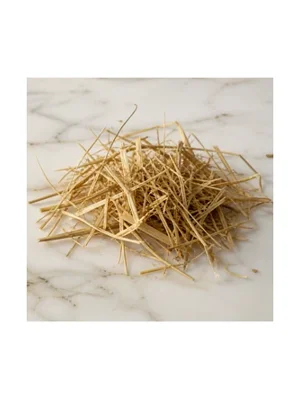
Perfumes featuring Mousse de Saxe
A selection of reviewed perfumes where Mousse de Saxe appears prominently.
No perfumes featuring this note have been reviewed yet. Check back soon.