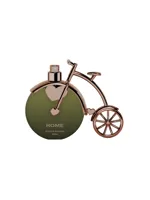
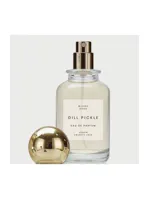
Dill Pickle
EDP
Wicked Good
Statement
Note profile
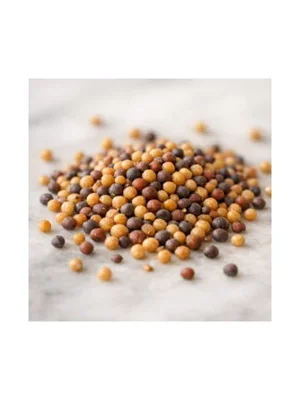
Mustard seed comes from black mustard (Brassica nigra) and brown mustard (Brassica juncea). The whole seed has almost no smell. Ground and wetted, it releases allyl isothiocyanate, and distillation gives the essential oil. The oil smells sharp, pungent and sulphurous, like horseradish or wasabi. IFRA prohibits mustard oil as a fragrance ingredient.
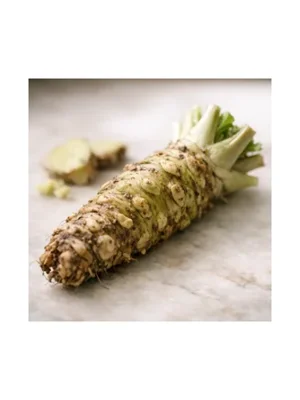
Sharp, pungent and sulphurous, like horseradish and wasabi. Much of the sting is felt in the nose and eyes rather than smelled. It fades fast to a faint, warm, slightly sulphurous trace. It carries a green, leafy sharpness and a hot, peppery spice bite.
Read off the wheel, not a label applied to the note.
Tap a perfume to see where Mustard Seed sits in it. The rest of the picture goes grey

Perfumers can build Mustard Seed from materials such as:
Smell words come from published sources.
A given perfume with this note may use some of these, or something else.
The seeds of black mustard (Brassica nigra) and brown mustard (Brassica juncea). The seed is ground and soaked in warm water. The enzyme myrosinase then turns sinigrin into allyl isothiocyanate. The oil is steam distilled and holds more than 92% allyl isothiocyanate. The pressed mustard oil used for cooking is a different product.
Mustard oil is rarely used in perfumery. The IFRA Standard on allyl isothiocyanate says mustard oil should not be used in fragrance mixtures. Where it was used, it went in at trace levels. Suppliers name hyacinth, violet, geranium, olibanum and black pepper as partners.
A selection of reviewed perfumes where Mustard Seed appears prominently.
Get the verdict in your inbox
New finds, honest verdicts, and price drops.
No spam. Unsubscribe anytime. See our privacy policy.
Are you sure?