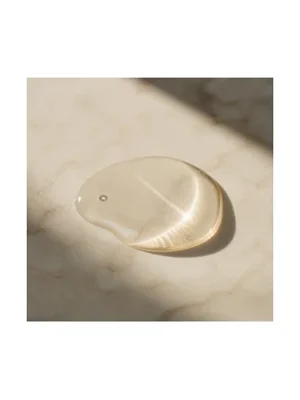
Paradisamide
Note Profile
About
A tropical fruit note of guava and passion fruit, cut with grapefruit tartness and a rhubarb tang. It is fresh and bitter rather than sweet, and it lasts far longer than the fruit it evokes.
Scent Profile
Tropical and fruity are the note, and all three trade sources name the same two fruits without hedging: 'tropical fruits base note, reminiscent of guava, passion fruit' (ScenTree), 'the lush sweetness of guava and passion fruit' (Fraterworks), 'passion-fruit tropical-fruit, guava' (PerfumersWorld). Tropical leads fruity by a small margin because every source puts the tropical framing first and the generic berry and stone-fruit references second. Citrus is grapefruit and it is more than a nuance: PerfumersWorld opens its whole descriptor with 'Fresh, bitter citrus green' before naming any fruit, and Fraterworks gives 'the tart brightness of grapefruit'. Sour is the rhubarb and cassis tang, 'the vegetal tang of rhubarb' and 'tart brightness'. Green is the rhubarb stem and the 'citrus green' opening, a stem greenness rather than a leaf one. Sulphurous rests on one source and is the weakest of the named facets: ScenTree files the material in the 'fruity/tropical fruits/sulfuric' category, which is the thiol-type effect that makes guava and passion fruit smell tropical rather than merely fruity. The molecule has no sulphur atom, so this is an olfactive family label and not chemistry, and the spread of 0.20 is set wide for that reason. Below the naming line, floral is ScenTree's shampoo-base observation, sweet_vanillic is Fraterworks' single word 'sweetness', and aquatic_ozonic is the juicy wateriness the same source implies. No source calls this material creamy or lactonic, and two of the three lead with 'fresh' or 'bitter', so the lactonic weight that guava and passionfruit carry is deliberately absent here.
ScentWheel
Read off the wheel, not a label applied to the note.
Origin
A Givaudan captive. The molecule is 2-ethyl-N-methyl-N-(3-methylphenyl)butanamide, CAS 406488-30-0, held here as the material `butanamide-2-ethyl-n-methyl-n-3-methylphenyl`. It is an amide, not a fruit extract and not an ester, which is why it behaves nothing like the natural volatiles it imitates.
Usage in Perfumery
Used at low dose, about 0.5% of a compound, to give a juicy lift to other fruity notes and to make a tropical accord survive the drydown. It also reads floral in shampoo and shower gel bases. Because it is a base note it is the way to put a fruit effect into the far end of a fragrance, where guava or passionfruit materials have long gone.
Similar Notes
Perfumes featuring Paradisamide
A selection of reviewed perfumes where Paradisamide appears prominently.
No perfumes featuring this note have been reviewed yet. Check back soon.