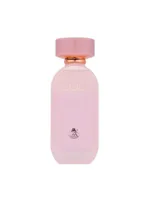
Roses D'Emotion
EDP
French Avenue
Statement
Note Profile
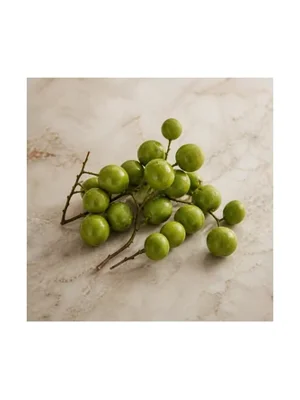
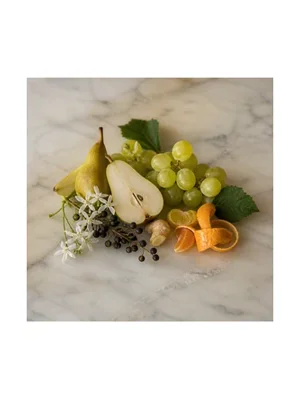
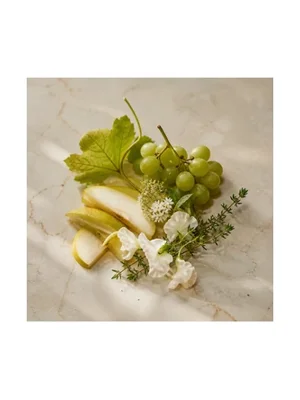
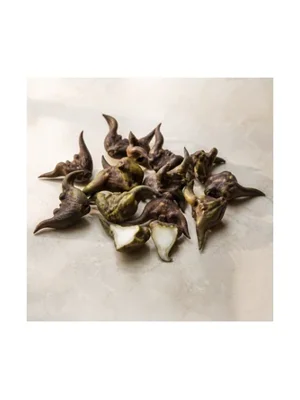
Water Fruits, watery fruits
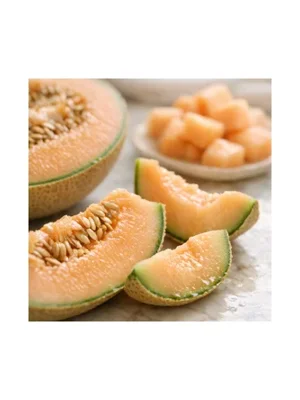
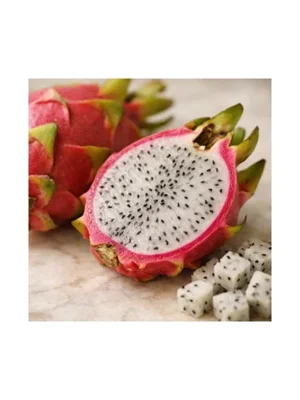
Water Fruit is a group note for the fruit that reads as watery rather than sweet - melon, watermelon, cucumber, kiwi, white grape and lychee. Three trade sources agree it is a class and not one material. What holds the class together is transparency. It smells of juice and cold water with a green edge, and it carries almost no acidity. Every source that files it puts it under fruit, not under water.
Fruity leads because every source files the note under fruit and names fruit first. It is held below melon's own 0.78 on purpose: Fragrenza says these fruits 'smell of water and sunlight rather than rich, concentrated sweetness', and Premiere Peau says 'the smell is not overly sweet'. Both are statements that the fruit is thin, not full. Aquatic_ozonic is the word 'water' doing real work - 'airy, light, and almost translucent', 'ozone-lifted, wave-cool', and Fragrenza's own claim that Calone and marine materials are shared between this family and the aquatics. It sits well below water-accord's 0.80 because here the water is a texture on fruit, not the subject. Green is stated by all three: Premiere Peau's subcategory line is 'fruity - fresh - green', its drydown 'fades to subtle green nuances', and the constructional account leads with cis-3-hexenol. Cucumber and kiwi carry it hardest. Cooling_mentholic is the one quality Fragrenza returns to - 'light, delicate, transparent, cooling', 'one of the most cooling scents in nature', 'the fragrance equivalent of a glass of cold water on a hot day'. Below the line: sweet_vanillic for the 'clean sweetness' and 'translucent sweetness' both sources name while denying it weight; clean_musk for Hedione's 'clean, diffusive, almost watery quality' and white grape's 'clean musty quality'; floral for lychee's 'rose-like sweetness'; mineral for 'mineral-bright'; tropical and aldehydic for lychee and for the green aldehydes; sour, held low because kiwi is 'slightly tart' while watermelon has 'no acidity to speak of' - the two members cancel; honeyed for the 'warmer, slightly musky-sweet quality' of Charentais melon alone; sulphurous, which no water-fruit source names but which two published members, melon and litchi, carry, so it is kept just off zero rather than asserted absent. Spreads on the four leading facets run 0.16 to 0.20 because the members genuinely disagree: cucumber sits at green with fruity, and melon at fruity with green.
Read off the wheel, not a label applied to the note.
No single source. Premiere Peau's glossary calls it 'a refreshing note that carries the essence of fresh, juicy fruits' and gives watermelon and cucumber as its synonyms. Fragrenza names six members - melon, watermelon, kiwi, lychee, white grape and cucumber - and calls the grouping 'something of a convenient construct'. ScentXplore lists 'watery (melon, watermelon, cantaloupe, etc.)' as one of the five standard subgroups of fruity notes, next to lactonic, berries, tropical and pome. None of these fruits yields a usable essential oil, so the note is built from aroma chemicals. Fragrenza names cis-3-hexenol and green aldehydes, ketal and acetal materials, a trace of aldehyde C14, Hedione, and Calone.
A top note. It opens a fragrance with juice and coolness and gives a heavier heart something light to sit against. Premiere Peau states it 'complements green notes and can provide a refreshing contrast to warmer, spicier base notes'. Usage under this exact spelling is a Fragrantica-vocabulary habit: 36 fragrances there and none on Parfumo. Parfumo prints the same idea as 'Watery Fruits', 37 times across 23 brands, from Rochas and Lanvin to Zara and Bath & Body Works. Counting both spellings, this is a mass-market summer note, not a niche one.
A selection of reviewed perfumes where Water Fruit appears prominently.
New finds, honest verdicts, and UK price drops.
No spam. Unsubscribe anytime. See our privacy policy.