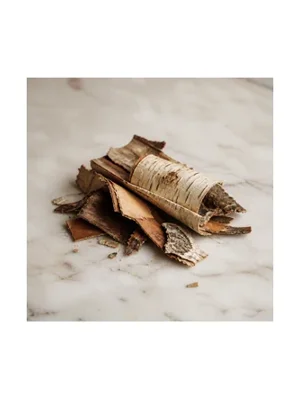
Sweet Birch
Note Profile
About
The steam-distilled bark oil of sweet birch, also called black birch or cherry birch. It smells of wintergreen, because it is almost entirely the same molecule. An authentication study measured methyl salicylate at 93.24-99.84% of the oil and described the odour as 'papery, lightly weak wintergreen, sweet, and lightly woody'.
Scent Profile
Cooling mentholic leads. All three sources name wintergreen first, and the chemistry says why - methyl salicylate at 93.24-99.84% leaves little room for anything else. It sits close to the published wintergreen note's 0.50 rather than above it, because the one primary organoleptic description calls this oil 'lightly weak wintergreen' next to true wintergreen. Sweet vanillic is the sweetness both the paper and the distiller name ('sweet, bright, slightly minty'). It is the sweet-medicinal sweetness of the ester, not sugar or vanilla, so it sits below wintergreen's own. Dry woody carries two descriptors at once: the paper's 'lightly woody' and its 'papery', the thin dry smell of the bark the oil comes off. Aromatic herbal is the 'slightly minty' reading. Fruity and green are held low and given wide spreads. No source names fruit or greenness for sweet birch, but the published wintergreen note carries fruity off the same molecule, so zeroing it here would assert an absence nobody stated.
ScentWheel
Read off the wheel, not a label applied to the note.
Origin
Bark of Betula lenta L., a hardwood of eastern North America. The tree makes methyl salicylate in its bark, so scraped twigs smell of wintergreen without any processing. The oil is produced by macerating the bark in water and steam distilling it. Sweet birch was harvested hard for oil of wintergreen until synthetic methyl salicylate arrived in the 1950s and 60s, by which point the tree was close to endangered.
Usage in Perfumery
A minty-sweet lift used where a fresh medicinal edge is wanted. It appears in fougeres, sport and barbershop accords, and in anything reaching for a root-beer or liniment reference. Parfumo attests it 3 times across 2 brands. Most material sold under this name is not sweet birch: the authentication study found none of 27 commercial samples carried genuine B. lenta markers, and detected wintergreen oil, synthetic methyl salicylate and castor oil instead.
Similar Notes
Perfumes featuring Sweet Birch
A selection of reviewed perfumes where Sweet Birch appears prominently.
No perfumes featuring this note have been reviewed yet. Check back soon.