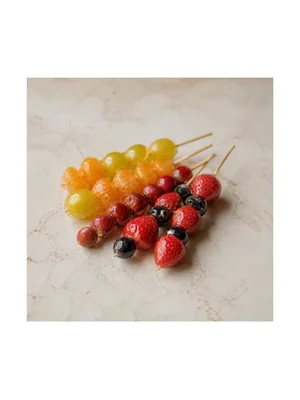
Tanghulu
Note Profile
About
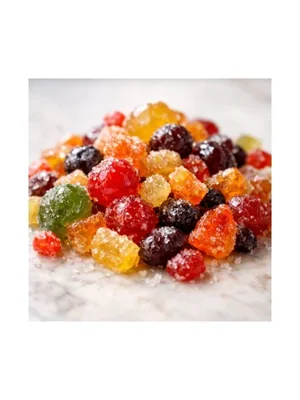
Tanghulu is the Chinese street sweet of whole fruits on a skewer under a thin, hard sugar glaze. The note is tart fruit first and sugar second. The fruit keeps a real sour edge through the glaze, and the glaze reads as thin boiled sugar rather than thick caramel.
Scent Profile
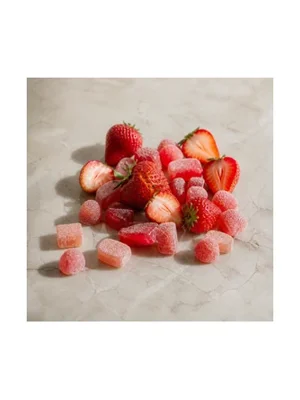
Fruity leads. Both perfume-trade sources put the fruit first and neither leads with sugar. The fruit is a medley rather than one named fruit, because the traditional hawthorn has no perfumery presence and both brands substitute strawberry, orange and grape. Sweet_vanillic is the glaze: 'the soft warmth of caramelized sugar', and 'the subtle sweetness of candied hawthorn'. It sits below the fruit rather than over it, because both sources call the coating light. Sour is the facet that makes this note its own thing. Raw hawthorn is independently described as 'tart and astringent' and 'quite sour by themselves', and the sugar shell tempers that rather than removing it. Below the naming line: honeyed for the candied-hawthorn sweetness one source names, citrus for the mandarin and orange in the fruit lists, green for the astringency of the raw fruit.
ScentWheel
Read off the wheel, not a label applied to the note.
Origin
A confectionery referent, not an extracted material. Traditional tanghulu is Chinese hawthorn, Crataegus pinnatifida, skewered and dipped in heated sugar syrup that hardens in the cold. Modern versions use strawberry, mandarin, grape, blueberry, pineapple, kiwi and banana. No flavour or fragrance house publishes an odour description of hawthorn fruit, and the two perfume brands that sell a tanghulu theme both build it from strawberry, orange and grape rather than hawthorn: LV1 Studio gives 'the juiciness of strawberry, orange, and grape, followed by the soft warmth of caramelized sugar'.
Usage in Perfumery
Use it as a gourmand fruit accord where the sugar must stay thin and the fruit must stay tart. It is brighter and sourer than a jam or a syrup note and lighter than a candied-fruit note. The Wear Test describes the effect as 'lightly glazed rather than heavy', which is the character to keep.
Similar Notes
Perfumes featuring Tanghulu
A selection of reviewed perfumes where Tanghulu appears prominently.
No perfumes featuring this note have been reviewed yet. Check back soon.