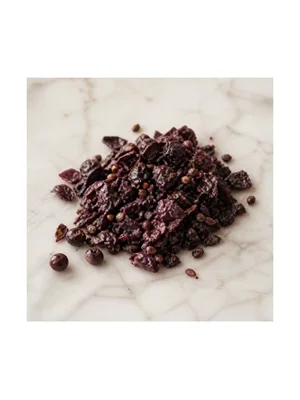
Wine Lees
Note Profile
About
Wine lees is the sediment left in the barrel after the wine is drawn off, and the note is scored as that sediment rather than as the wine. The boozy, fruity core it shares with any wine note. What separates it is the layer the sediment adds: yeast with a warm bread-like softness, an earthy and fungal damp, a mineral undertone, and the dry oak of the stave the lees sat against. Sources split on how tart or how sweet it runs, so sour and honeyed both carry wide spreads.
Scent Profile
Boozy leads and all three sources support it. Bon Parfumeur names fermented alcohol directly, Fragrenza calls the note slightly alcoholic, and the material is wine sediment. Fruity is the second thing every source says: ripe grape from Bon Parfumeur, warm fruity facets from Carrement Belle, and from Fragrenza a fork between dried fruit, raisin, fig and prune, and a crisper green-grape register. Sour is the tartness Fragrenza is specific about, a sharpness like lees-aged Burgundy or skin-contact wine. Nutty is the yeast, described as a warm and almost bread-like softness that gives body to the accord, and it is placed in nutty because that is where the published bread note puts the same quality. Earthy covers the earthy and fungal facets, the damp-cellar side of the sediment. Dry_woody is the barrel, stave oak or wet barrel stave. Mineral is Fragrenza's mineral undertone, stated once and not corroborated. Below the naming line, honeyed is Bon Parfumeur's gourmand accent of honey or candied fruit, sweet_vanillic is the candied half of that same phrase, and floral and green are the subtle floral nuances and the green-grape edge that two sources mention in passing.
ScentWheel
Read off the wheel, not a label applied to the note.
Origin
Lees, or dregs, are the dead yeast cells, grape solids and tartrates that settle out of wine after fermentation. Wine aged sur lie sits on this sediment and takes character from it, which is where the yeasty and bready descriptions come from. No fragrance house or supplier document naming a wine-lees material was found, and none of the three trade sources says what the perfumery note is made from, whether an absolute, a hydrodistillate or a built accord. So the chemistry behind the yeast, fungal and mineral claims cannot be checked against any spec sheet or GC-MS. All three sources are perfume-house or perfumery blogs.
Usage in Perfumery
11 Fragrantica placements and 4 Parfumo placements across 4 brands. Fragrantica files it under Beverages. Bon Parfumeur, which sells a fragrance using it, treats it as a rich and complex accord rather than an accent, and Carrement Belle pairs it with green and white facets that it says reveal warm fruit. Nothing found states a dose range. In the published set it is the wine note with a cellar-floor rather than a glass-of-wine reading, which is what should distinguish it from red-wine, white-wine and port-wine.
Similar Notes
Perfumes featuring Wine Lees
A selection of reviewed perfumes where Wine Lees appears prominently.
No perfumes featuring this note have been reviewed yet. Check back soon.