
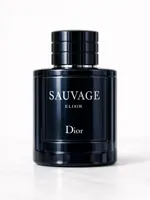
Sauvage Elixir
Parfum · 2021
Dior
Acquired
Fragrance allergen
Farnesol is a sesquiterpene alcohol with a soft green-floral scent, often compared to lily of the valley and linden blossom. It turns up at low levels in many essential oils and is also made from nerolidol. Perfumers use it for lily-of-the-valley effects and as a fixative.
Farnesol has been reported in more than 30 essential oils, usually at low levels of 0.5 to 1.0 per cent, with cabreuva oil holding up to 2.5 per cent. It appears in citronella, neroli, tuberose, rose, ylang-ylang and ambrette seed. Synthetic farnesol, made from nerolidol, has largely replaced extraction from plants.
Mild and delicate: a fresh, green floral note with a lily-of-the-valley character and a sweet linden-flower quality. The odour is low in strength but long lasting, and one source says it seems stronger as it evaporates.
Perfumers reach for farnesol to build lily-of-the-valley notes and to add a fruity nuance, and it also acts as a fixative. It is used in rose and other floral compositions. Beyond perfume it is listed as a flavouring agent in foods and beverages.
Named on 30% of the 6,851 perfume ingredient lists we hold (2,023 perfumes).
The SCCS opinion SCCS/1459/11 lists farnesol among its List B fragrance chemicals, and farnesol is one of the six components of Fragrance Mix II, a European patch-test screen. IFRA has a Restriction Standard (Amendment 49) with category limits and a purity specification of at least 96 per cent farnesol isomers. Most company reports summarised by PubChem give the classification 'may cause an allergic skin reaction'.
A list that does not name it does not prove it is absent: brands only have to name it above the threshold.
Share of the perfumes we hold a list for, in each concentration.
Share of the lists naming Farnesol that also name each of these.
Parfum · 2021
Dior
EDP · 2015
Armaf
EDP · 2011
Dior
EDP · 2023
Yves Saint Laurent
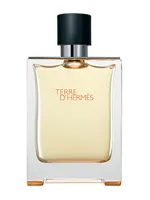
EDT · 2006
Hermès
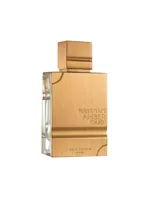
EDP · 2024
Al Haramain Perfumes
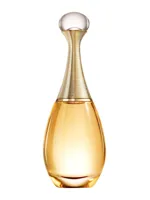
EDP · 1999
Dior
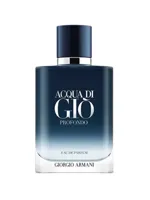
EDP · 2024
Giorgio Armani
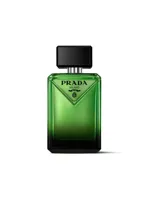
EDP · 2025
Prada
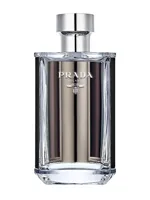
EDT · 2016
Prada
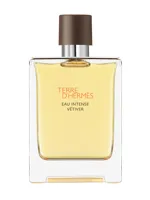
EDP · 2018
Hermès
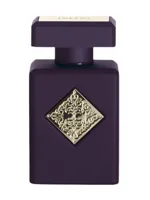
EDP · 2016
Initio Parfums Privés
Farnesol has a mild, delicate green-floral scent with a typical lily-of-the-valley character. Other descriptions mention fresh, sweet linden flower and an angelica-like tone. It is not a loud material, but it lasts.
It is both. Farnesol occurs in neroli and ylang-ylang oils and in ambrette seeds, and it can be extracted from ambrette seed absolute. Today synthetic farnesol, made from nerolidol, mostly replaces that extraction.
Farnesol is on the EU list of fragrance allergens that must be named in the ingredient list when they exceed set thresholds. For leave-on products such as perfume that threshold is 0.001 per cent of the finished product.
New finds, honest verdicts, and price drops.
No spam. Unsubscribe anytime. See our privacy policy.