
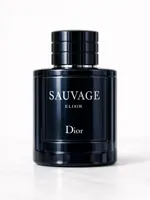
Sauvage Elixir
Parfum · 2021
Dior
Acquired
Fragrance allergen
Geraniol is a rose-scented alcohol that occurs in rose and palmarosa oils. Perfumers use it across floral blends, and soap makers value it. It is also one of the substances EU rules require to be named on a cosmetic label once it passes set concentrations.
Geraniol occurs in rose, palmarosa, citronella, lemongrass and other essential oils. Industry obtains it by fractional distillation of those oils, or makes it from myrcene, which comes from pyrolysis of beta-pinene. Isomerising linalool is a further commercial route to a high-purity grade.
A sweet rose scent with a pleasant, geranium-like floral character. Chemical records list it as a colourless to pale yellow oily liquid and describe the odour as sweet rose, geranium-like and floral.
Geraniol is one of the most frequently used terpenoid fragrance materials. It suits flowery, rose-type compositions and does not discolour soap. In flavours it is added in small amounts to lift citrus notes, and it is an intermediate for geranyl esters, citronellol and citral. It is also used as a biopesticide against mites.
Named on 76% of the 6,851 perfume ingredient lists we hold (5,213 perfumes).
Geraniol is on the EU list of fragrance allergens that must be named on cosmetic labels. The SCCS opinion SCCS/1459/11 (2012) places it in its table of established fragrance contact allergens of special concern. PubChem lists hazard statement H317 (may cause an allergic skin reaction) for it under Regulation (EC) No 1272/2008. The SCCS notes it forms geranial and epoxy-geraniol on oxidation. IFRA has a Standard restricting its use.
A list that does not name it does not prove it is absent: brands only have to name it above the threshold.
Share of the perfumes we hold a list for, in each concentration.
Share of the lists naming Geraniol that also name each of these.
Parfum · 2021
Dior
EDP · 2015
Armaf
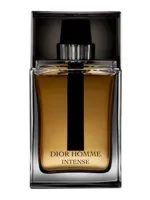
EDP · 2011
Dior
EDP · 2023
Valentino
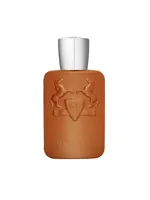
EDP · 2023
Parfums de Marly
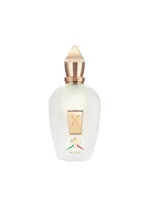
EDP · 2015
Xerjoff
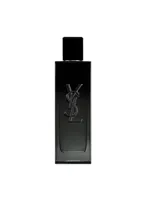
EDP · 2023
Yves Saint Laurent
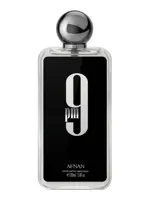
EDP · 2020
Afnan
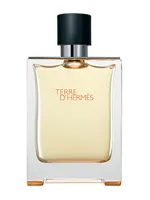
EDT · 2006
Hermès
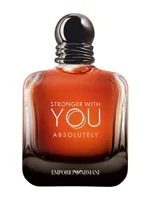
Parfum · 2021
Giorgio Armani
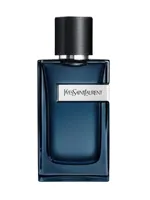
EDP · 2018
Yves Saint Laurent
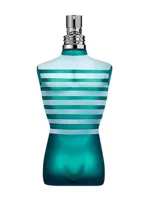
EDT · 1995
Jean Paul Gaultier
Mainly sweet rose, with a geranium-like floral edge. Chemical records describe the odour as sweet rose, geranium-like and pleasantly floral, which is why it is used in rose and other flowery perfume compositions.
Both. It occurs naturally in rose, palmarosa and citronella oils and can be isolated from them by distillation. It is also made synthetically, for example from myrcene or by isomerising linalool.
EU cosmetics rules list it as a fragrance allergen to be named when present above 0.001% in leave-on products or 0.01% in rinse-off products. It was already on the older labelled list, and the 2012 SCCS opinion kept it as a relevant allergen.
New finds, honest verdicts, and price drops.
No spam. Unsubscribe anytime. See our privacy policy.