
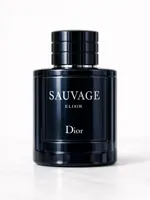
Sauvage Elixir
Parfum · 2021
Dior
Acquired
Fragrance allergen
Citral is the lemon-scented aldehyde that is the main component of lemongrass oil. It comprises two closely related forms, geranial and neral. Perfumers use it for its citrus effect, and chemists use it as a starting material for other fragrance ingredients.
Natural citral is a roughly 2:1 mixture of geranial and neral. It is isolated by distillation from lemongrass oil and Litsea cubeba oil, of which it is the main component. Lemon, verbena and orange oils also contain it. It can also be made synthetically, for example from isoprene.
A strong, fresh lemon smell. Geranial carries the stronger lemon, while neral is described as a little less intense but sweeter.
Perfumers add citral for its citrus effect, typically at 0.1 to 1% of a fragrance composition. Its main commercial role is as a starting material for making other fragrance ingredients. Outside perfume it is a flavouring in drinks, baked goods and sweets, and it is used to make vitamin A and ionone.
Named on 77% of the 6,851 perfume ingredient lists we hold (5,259 perfumes).
Citral is on the historic list of fragrance allergens that the EU required to be individually labelled before its 2023 amendment. It must be named when above 0.001% in leave-on or 0.01% in rinse-off products. SCCS/1459/11 lists it as an established contact allergen in humans and notes geranial can become a stronger sensitiser by air oxidation. IFRA Standard 021 limits fine fragrance to 0.6%.
A list that does not name it does not prove it is absent: brands only have to name it above the threshold.
Share of the perfumes we hold a list for, in each concentration.
Share of the lists naming Citral that also name each of these.
Parfum · 2021
Dior
EDP · 2015
Armaf
EDP · 2011
Dior
EDP · 2010
Creed
EDP · 2023
Valentino
EDP · 2023
Parfums de Marly
EDP · 2015
Xerjoff
EDP · 2021
Lattafa
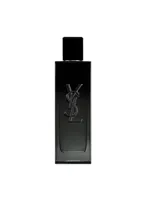
EDP · 2023
Yves Saint Laurent
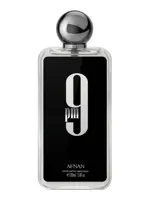
EDP · 2020
Afnan
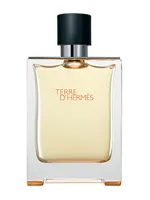
EDT · 2006
Hermès
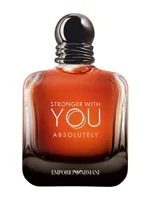
Parfum · 2021
Giorgio Armani
Citral smells strongly of lemon. It is the main component of lemongrass oil. The two forms differ slightly, with neral described as less intense but sweeter than geranial. Perfumers use it to give a fresh citrus note.
Both exist. It occurs naturally in lemongrass and Litsea cubeba oils and can be isolated from them by distillation. It can also be made synthetically, for example from isoprene.
EU cosmetics rules list citral as a fragrance allergen to be named above 0.001% in leave-on or 0.01% in rinse-off products. Perfume is otherwise declared collectively as parfum, and listed allergens are the exception.
New finds, honest verdicts, and price drops.
No spam. Unsubscribe anytime. See our privacy policy.