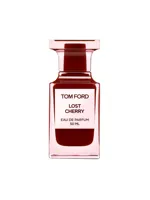
Lost Cherry
EDP · 2018
Tom Ford
Acquired
Fragrance allergen
Balsam of Peru is a dark brown, vanilla-scented balsam collected from the trunk of a tree, mainly in El Salvador. Perfumers use it as a fixative for amber and vanilla notes. EU rules name it on labels and cap the use of its extracts.
The SCCS says the resin is harvested from the balsam of Peru tree, Myroxylon balsamum var. pereirae, after thermal stress, almost exclusively in El Salvador. ScenTree describes local workers incising the trunk to collect the balm, which is then diluted in alcohol to give the resinoid.
Sweet, balsamic and vanilla-like, with woody, powdery and resinous tones. The SCCS describes a pleasantly vanilla-like smelling dark brown liquid, and The Good Scents Company lists sweet, balsamic, vanilla, woody, powdery and resinous.
ScenTree says it is used as a fixative, a material that helps a scent last, for amber and vanilla notes or in floral compositions, and that it can add an animal-like touch to a balsamic note. The SCCS says it can improve taste or smell in soaps, shampoo and lipsticks, as well as sweets, tobacco and beverages.
Named on 1% of the 6,851 perfume ingredient lists we hold (73 perfumes).
The SCCS lists Myroxylon pereirae in its highest band, ++++, meaning more than 1,000 published cases, and says it has long been used as a screening agent in baseline patch-test series. ScenTree says it must be named above 0.001% in leave-on or 0.01% in rinse-off products. IFRA's index lists it under both Restriction and Prohibition standards, and Oxford Biosciences gives a maximum of 0.4% for its oil or extract.
A list that does not name it does not prove it is absent: brands only have to name it above the threshold.
Share of the perfumes we hold a list for, in each concentration.
Share of the lists naming Myroxylon Balsamum Pereirae Balsam Extract that also name each of these.
EDP · 2018
Tom Ford
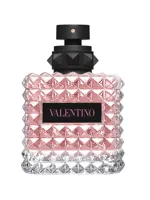
EDP · 2019
Valentino
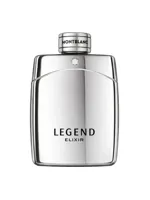
Parfum · 2026
Montblanc
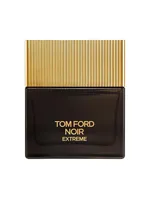
EDP · 2015
Tom Ford
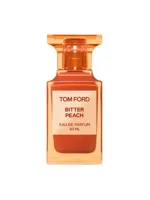
EDP · 2020
Tom Ford
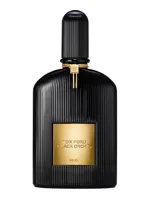
EDP · 2006
Tom Ford
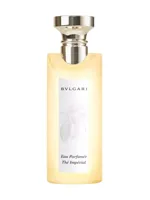
EDT · 2026
Bvlgari
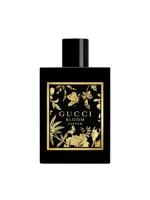
Parfum · 2025
Gucci
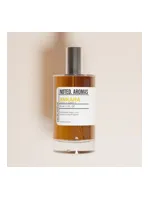
EDP
Noted Aromas
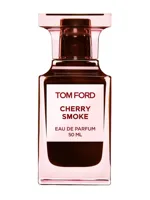
EDP · 2022
Tom Ford
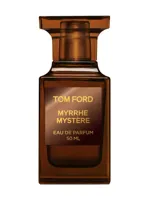
EDP · 2023
Tom Ford
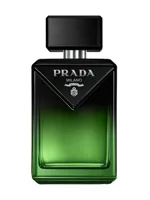
Parfum · 2026
Prada
Sweet, balsamic and vanilla-like, with woody and resinous tones. The SCCS describes a pleasantly vanilla-like smelling dark brown liquid, and ScenTree places it in the balsamic, vanillic family.
From the trunk of the balsam of Peru tree, harvested almost exclusively in El Salvador, according to the SCCS. ScenTree says workers incise the trunk and collect the exuded balm.
ScenTree says it is classed as an allergen under Regulation (EU) 2023/1545, so it must be named above 0.001% in leave-on or 0.01% in rinse-off products. Oxford Biosciences also lists a maximum of 0.4% for Myroxylon Pereirae oil or extract.
New finds, honest verdicts, and price drops.
No spam. Unsubscribe anytime. See our privacy policy.