

















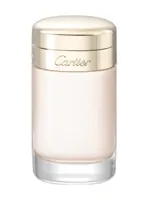
Baiser Vole
EDP
Cartier
Favourite
French jewelry-house designer brand whose fragrances balance polished luxury with increasingly modern, unisex compositions.
Cartier was founded in Paris in 1847 by watchmaker and jeweler Louis-François Cartier, who took over the workshop of his mentor Adolphe Picard. Over the following decades, his son Alfred Cartier and grandsons Louis, Pierre and Jacques expanded the house into an international luxury name, initially through jewelry and timepieces. Cartier later became part of the Richemont group in 1988, anchoring it within a large luxury conglomerate while maintaining its historical identity in watches, jewelry, leather goods and fragrance.
Cartier’s move into perfumery came relatively late. Although the name “Cartier Parfums” was registered in 1938, the first official fragrance, Must de Cartier, did not appear until 1981. Created by Jean-Jacques Diener, Must de Cartier was a green ambery composition whose bottle was modeled on the brand’s bestselling gold cigarette lighter and designed to be refillable, echoing Cartier’s object-design heritage. The same year saw the launch of Santos de Cartier, a fragrance homage to aviator Alberto Santos-Dumont, who had earlier inspired Cartier’s 1904 Santos wristwatch.
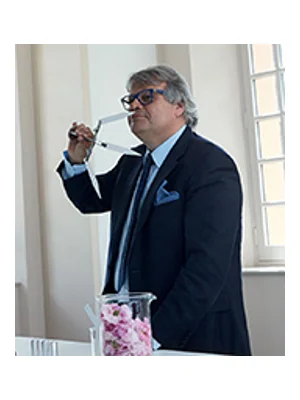
Since 2005, in-house perfumer Mathilde Laurent has shaped Cartier’s modern fragrance identity. She has created projects such as Les Heures de Parfum and expanded the line of “shareable” scents like Eau de Cartier, which debuted in 2001 as a unisex, cologne-style fragrance built around violet and cedarwood. Under Laurent, the brand has focused on structured, often transparent compositions that reference Cartier’s jewelry aesthetics while exploring themes like woods, florals and abstract musks across both mainstream and higher-end collections.
A designer, luxury house known for woody compositions.
Cartier’s early fragrances in the 1980s and 1990s, such as Must, Santos, Panthère, Pasha and Déclaration, leaned into characterful, often strong signatures typical of that era. From the 2000s onward, the brand gradually shifted toward cleaner, more versatile and often unisex structures, exemplified by Eau de Cartier and later collections under Mathilde Laurent. The launch of premium lines like Les Heures de Parfum signaled a move into haute parfumerie, giving the house space to experiment with more nuanced and abstract themes alongside its core designer offerings.
Cartier is a solid choice if you want polished, wearable luxury with a coherent brand aesthetic rather than boundary-pushing experimental perfumery. The line shines most in its refined woods, musks and modern florals, but hardcore niche fans may find it too polite.
Favourite - easy to wear anywhere · Statement - bold & distinctive · Acquired - bold, for fewer occasions
EDP
Cartier
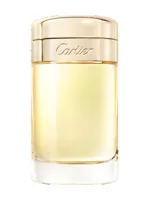
Parfum
Cartier
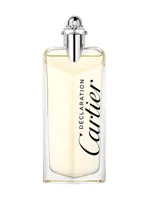
EDT
Cartier
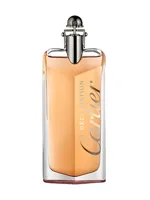
Parfum
Cartier
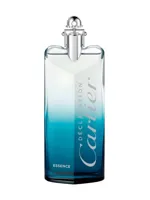
EDP
Cartier
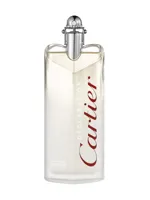
EDT
Cartier
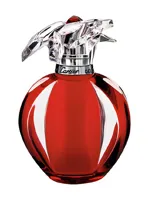
EDP
Cartier
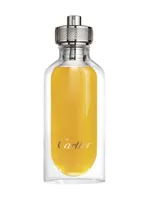
EDP
Cartier
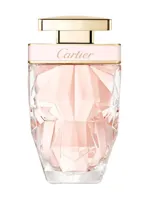
EDT
Cartier
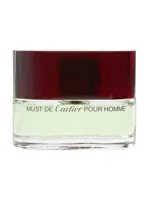
EDT
Cartier
New finds, honest verdicts, and price drops.
No spam. Unsubscribe anytime. See our privacy policy.