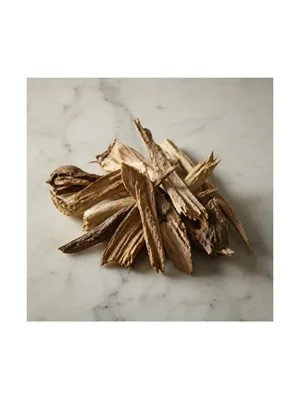
Ash Tree
Note Profile
About
Ash tree is the timber of Fraxinus, and the timber has a smell that woodworkers know and do not like. Six Wood Database species pages give the same line: a distinct, moderately unpleasant smell when the wood is worked. Nobody prints what it smells of, only that it is there and it is off. The two first-hand reports that exist point sour and musty, one of them adding iodine. This is a pale, dry, sappy hardwood with a sour edge, not a sweet or resinous wood. Do not confuse it with ash the burnt residue, which is a different note.
Scent Profile
Dry_woody leads because the referent is worked hardwood and that is the only thing every source agrees on. It is not pushed higher, because none of the six species pages calls the smell strong, only distinct and moderately unpleasant, and ash is not an aromatic timber the way cedar or sandalwood is. Sour is the second facet and carries the unpleasantness. It is the one named character with direct support: a workshop report of ash smelling sour and off-gassing, and it fits the wet, sappy sharpness green hardwoods give off under a saw. Earthy takes the musty half of the second report, the piece of finished ash furniture that developed a smell between iodine and musty. Mineral takes the iodine half of that same sentence. Both of those numbers rest on one comment each, which is why their spreads are wide. Green is freshly cut sap rather than leaf, and it is deliberately kept under the naming threshold because no source uses the word. Mossy_chypre, powdery, creamy_woody, sweet_vanillic and sulphurous are all traces, held low and wide: they mark directions the unpleasantness could actually run, not claims anybody made. What is not here matters too. There is no smoky and no mineral dominance, because this is the living tree, not burnt residue.
ScentWheel
Read off the wheel, not a label applied to the note.
Origin
The wood of ash trees, genus Fraxinus, in the olive family. The odour line is recorded for six species: white ash (F. americana), European ash (F. excelsior), black ash (F. nigra), green ash (F. pennsylvanica), Oregon ash (F. latifolia) and blue ash (F. quadrangulata). The smell is released by cutting, sawing and sanding rather than by the standing tree. No perfumery house sells an ash wood oil or absolute, and no distillation of Fraxinus timber was found, so the perfumery note is a built accord rather than an extract.
Usage in Perfumery
Parfumo records 35 perfumes carrying the note, first in 2012 and last in 2025, and says it usually runs through the whole fragrance rather than sitting in one layer. It is absent from Fragrantica's vocabulary. That usage pattern matters for reading this vector: 35 perfumers are not selling an unpleasant smell, so the accord in the bottle is almost certainly a cleaned-up pale dry wood, with the sour and musty edges of real ash timber trimmed off.
Similar Notes
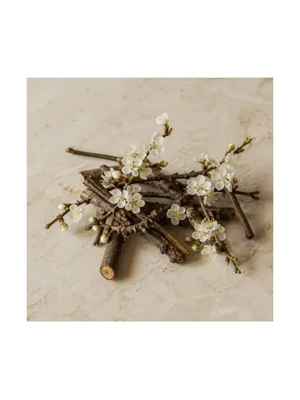
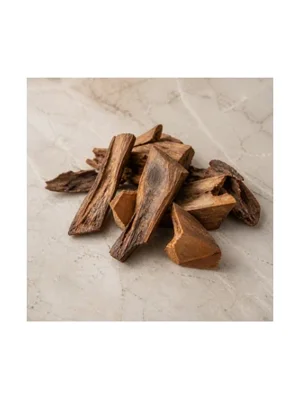
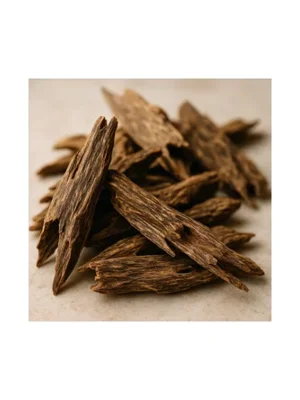
Perfumes featuring Ash Tree
A selection of reviewed perfumes where Ash Tree appears prominently.
No perfumes featuring this note have been reviewed yet. Check back soon.