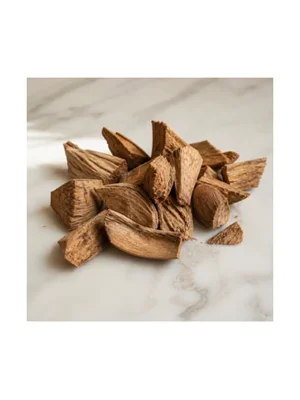
Coconut Palmwood
Note Profile
About
Dry, salt-tinged wood with a coconut shadow
Scent Profile
Dry_woody leads and every source agrees on it: reviewers of the one attested composition reach for bamboo and palm trunk to describe it, and the publisher files the term under Woods. Tropical sits under that and carries the coconut identity, but as the fruit's dry shell rather than its flesh - three reviewers say there is little sweetness. Mineral is the salt reading, called out four times in the same reviews. Creamy_woody is the softer edge one reviewer names when calling it "woody and creamy", which keeps the note from reading as bare timber. Below the named facets there is a light lactonic trace, a small green stalk quality from the bamboo comparison, and a faint aquatic lift.
ScentWheel
Read off the wheel, not a label applied to the note.
Origin
Coconut palmwood is the timber of the coconut palm, Cocos nucifera, rather than the flesh, water or blossom. No manufacturer, trade or encyclopaedic source could be found that treats it as an isolated perfumery raw material. There is no Givaudan, Firmenich, IFF, Symrise, ScenTree, Eden Botanicals or Hermitage Oils listing for it, and no PubChem or Wikipedia entry for it as a material. The term may therefore name a composed woody accord rather than an extract of the trunk. Nothing found confirms or rules that out.
Usage in Perfumery
Parfumo tracks the term across 9 placements and 9 brands, filed under Coconut, Tree and Woods. The one composition examined in depth prints it as the opening note over frankincense, salt and seaweed at the heart and amber, musk and sandalwood at the base. That is how the note is reached for: a dry woody way into a tropical theme, in place of the creamy coconut a reader expects.
Similar Notes
Perfumes featuring Coconut Palmwood
A selection of reviewed perfumes where Coconut Palmwood appears prominently.
No perfumes featuring this note have been reviewed yet. Check back soon.