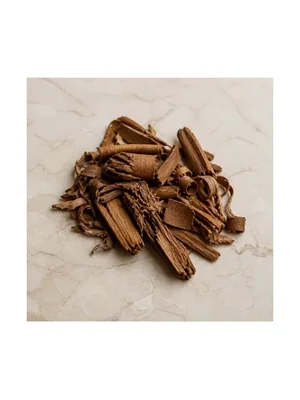
Chestnut Wood
Note Profile
About
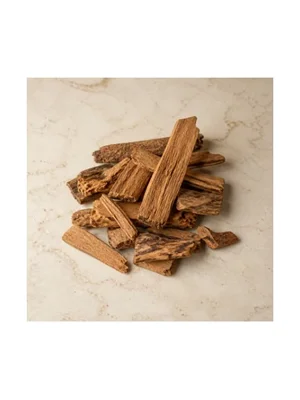
Chestnut wood is the timber of Castanea sativa, long used in the Mediterranean for wine and brandy barrels because it was everywhere and cheap. Toasted, it smells of dry wood carrying a coconut-lactone sweetness, a caramelised vanillic warmth and a spicy phenolic smoke. It is not the roasted-nut gourmand that the published `chestnut` note describes.
Scent Profile
Dry_woody is the body, real seasoned timber, and it is held below oaken-barrel at 0.78 and roasted-oak at 0.82 because there is no perfumery material here at all, only cooperage chips. Sweet_vanillic covers the maltol and methyl vanillate that the paper measures higher in chestnut than in either oak, a caramelised rather than a creamy vanilla. It still lands under oak's 0.58, because two of the other caramel compounds, cyclotene and furaneol, scored lower in chestnut, so the net sweetness is not above oak's. Lactonic is cis-whiskylactone, the paper's headline finding and a coconut descriptor, scored under roasted-oak's 0.62 because oak is the wood that owns this molecule and chestnut had never been shown to carry it before. Warm_spice is 4-methylguaiacol, which the paper's own descriptor table calls spicy and phenolic. Smoky is the same guaiacol read from its other side, supported by earlier brandy work finding the highest burned-aroma intensities in chestnut-aged spirit. Below the naming line sit creamy_woody and animalic, the second from p-cresol, and small stated traces of fruity, floral from geraniol and aldehydic from octanal.
ScentWheel
Read off the wheel, not a label applied to the note.
Origin
No fragrance house sells a chestnut wood essential oil, absolute or CO2 extract, and none turned up in this search. What is known comes from cooperage research. A 2013 gas chromatography-olfactometry study measured the odour-active compounds in chestnut chips seasoned 24 months and toasted at 185 degrees C for 45 minutes, alongside acacia, cherry, ash and two oaks. Chestnut was set apart by cis-whiskylactone, detected in the species for the first time, by higher maltol and methyl vanillate than either oak, and by a high level of 4-methylguaiacol.
Usage in Perfumery
Used as a base wood where a brief wants barrel and cellar rather than forest: spirits accords, boozy woods, and gourmand compositions that need timber under the sugar. It sits close to oak and reads as a lighter, less toasty, more coconut-inflected version of it. Perfumers reaching for a chestnut smell in the nut sense build a synthetic accord instead and should use the `chestnut` note for that.
Similar Notes
Perfumes featuring Chestnut Wood
A selection of reviewed perfumes where Chestnut Wood appears prominently.
No perfumes featuring this note have been reviewed yet. Check back soon.