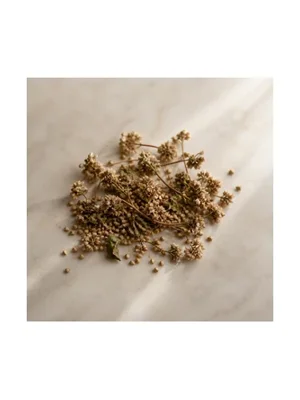
Buckwheat
Note Profile
About
Buckwheat is a grain note. It reads dry and nutty over a grassy, earthy base, with a bitter edge that keeps it from being comforting in the way wheat or oat are. Toasting shifts it towards malt and smoke and pushes the nuttiness up. Raw it is milder and greener.
Scent Profile
Nutty leads, because both sources reach for it independently: Tasting Table names 'nutty' twice and says toasting 'enhanc[es] the overall nuttiness', and the sensory paper's trained panel defines its buckwheat attribute as 'the smell associated with toasted grain'. Salicylaldehyde, the compound the literature names for dehulled groats, is almond-like, which is the same facet. Green is nearly level with it and is the raw form: 'mild, grassy, and quite agreeable' is the first sensory sentence in the culinary source, and Fragrantica files the note under greens and herbs rather than gourmand. The two lead facets are close together because the sources describe two different preparations of one seed, and nothing found says which one a perfumer means. Earthy is 'its bitterness and robust earthiness', quoted directly. Tobacco_hay is the dry cereal-straw facet every grain note in this vocabulary carries, and it is supported here by 'toasted grain' and 'malty'. It is set below rye 0.45, wheat 0.45, oat 0.60 and barley 0.60 because buckwheat is not a grass and no source gives it straw or hay in those words. Below: smoky rests on the single word 'smoky' in the aroma sentence and on toasting; sweet_vanillic is the 'malty' reading and is held low because malt itself is 0.68 and buckwheat is never called sweet; fruity is 'grassy, fruity, and malty' after toasting; sour is the closest this vocabulary comes to the bitterness both sources name, and it is a poor fit rather than a good one; animalic and sulphurous carry the 'welcome hint of fishiness', which one source states and nothing corroborates. Honeyed on purpose. Buckwheat honey is a rejected slug and a different material, and its molasses and sotolon descriptors belong to the honey, not to the seed.
ScentWheel
Read off the wheel, not a label applied to the note.
Origin
Buckwheat is the seed of Fagopyrum esculentum, a plant in the dock family and not a grass, so it is a pseudocereal rather than a true cereal. The odour material behind the note is the groat, either raw or dry-roasted as kasha or as the roasted-groat tea sold as soba-cha. The academic literature names salicylaldehyde as the character-impact compound of dehulled groats, which is the almond-like thread inside the nuttiness. No perfumery house was found selling a buckwheat extract, so a composition using this note is almost certainly building an accord rather than dosing a natural.
Usage in Perfumery
Perfumers use buckwheat as a heart-stage gourmand and cereal accent, in the same slot as barley, oat and malt. It sits under milk, honey and tonka in a grain accord and gives a drier, more bitter reading than wheat. Fragrantica files it under greens, herbs and fougeres rather than gourmand, which fits the grassier raw form.
Similar Notes


Perfumes featuring Buckwheat
A selection of reviewed perfumes where Buckwheat appears prominently.
No perfumes featuring this note have been reviewed yet. Check back soon.