Tropical Woods
Note Profile
About
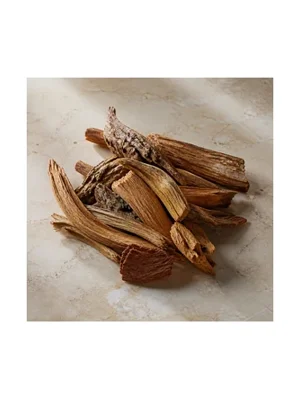
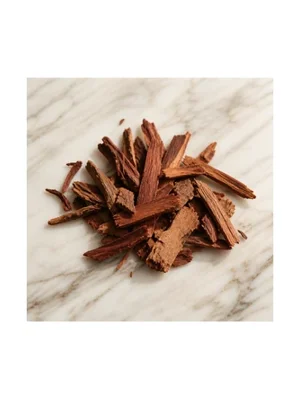
Tropical woods is a category note, not a single material. One trade glossary defines it and puts two woods in the bracket: sandalwood and rosewood. The note therefore reads as warm equatorial hardwood, creamy and soft at its centre, with a brighter green and faintly rosy lift over the top. It is the warm, resin-free end of the woody family. It is not a pale wood and it is not a smoky one.
Scent Profile
Creamy_woody leads and is the subject of the note. Eden Botanicals files plantation sandalwood as 'very deep, soft, sweet-woody, with a very long, full-bodied, balanced, extremely sweet and creamy-smooth dry down', and that soft milky wood is what the bracket is built around. Dry_woody is the timber under the cream, present in both named members. Green and floral both come from the rosewood half: Eden Botanicals describes rosewood leaf as 'fresh, bitter green-woody, highly aromatic, with slight camphoraceous and faint rosy nuances'. The floral is rosy rather than a flower in its own right, so it stays below the woods. Below the vector carries sweet_vanillic and earthy from the sandalwood drydown, a small aromatic_herbal and cooling_mentholic for rosewood's camphoraceous edge, and traces of citrus, fresh_spice and clean_musk. No source describes the two woods blended, so this vector is a reading of the bracket rather than a measured accord.
ScentWheel
Read off the wheel, not a label applied to the note.
Origin
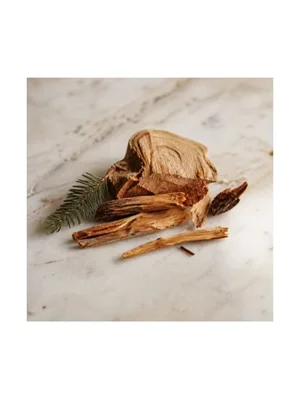
The term names a source region rather than a plant. Premiere Peau's woody-notes glossary lists 'tropical woods (sandalwood, rosewood)', which is the only definition found for it. Sandalwood here is the steam-distilled heartwood oil of Santalum species. Rosewood is the oil of Aniba rosaeodora, now usually the leaf rather than the felled trunk. Both grow in equatorial forest. Nothing else about their chemistry is shared, so the grouping is geographic.
Usage in Perfumery
Perfumers use it as a base for warmth and body without the dryness of cedar or the sweetness of amber. It sits under white florals, under gourmand accords and behind fruit. Marketing copy uses the term as a generic when the exact wood is not disclosed, so it appears in pyramids where sandalwood or a sandalwood substitute is doing the work.
Similar Notes
Perfumes featuring Tropical Woods
A selection of reviewed perfumes where Tropical Woods appears prominently.
No perfumes featuring this note have been reviewed yet. Check back soon.