
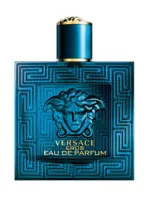
Eros
EDP · 2020
Versace
Acquired
Fragrance allergen
Bergamot peel oil is the essential oil pressed from the rind of the bergamot fruit, Citrus bergamia. It has a fresh, zesty citrus smell and is widely used in colognes, perfumes and cosmetics, as well as in food and confectionery. It is a natural mixture of many components.
Bergamot trees are grown almost exclusively on the southern coast of Calabria in Italy, which supplies more than 90 per cent of world production. The oil is obtained by rasping and cold pressing the fruit peel. ScenTree lists its main parts as limonene (30 to 45 per cent), linalyl acetate (22 to 36 per cent) and linalool (3 to 15 per cent).
Fresh, zesty citrus. A scientific review describes an intense fragrance and freshness and a characteristic pleasant odour, and ScenTree files it under citrus, zesty, bergamot. Its linalyl acetate adds a sweet bergamot and lavender side.
Bergamot oil is widely used in perfume, cosmetics, food and confectionery. In perfumery ScenTree lists it in eaux fraiches, colognes and chypre accords, where it brings freshness to the opening and lightens oriental notes.
Named on 4% of the 6,851 perfume ingredient lists we hold (240 perfumes).
IFRA has a Restriction standard for expressed bergamot oil, set because of its phototoxic effects, with limits that depend on product category, from 0.40 per cent in several categories to no restriction in others. A review links the phototoxicity to bergapten (5-MOP) and notes that furocoumarin-free oil is made for perfumery. In the EU it was added to the labelled allergen list by Regulation (EU) 2023/1545. One industry source says Great Britain has not adopted that expansion.
A list that does not name it does not prove it is absent: brands only have to name it above the threshold.
Share of the perfumes we hold a list for, in each concentration.
Share of the lists naming Bergamot that also name each of these.
EDP · 2020
Versace
EDP · 2021
Xerjoff
EDP · 2019
Valentino
Body Spray · 2026
Lancôme
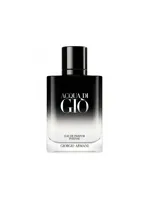
EDP · 2026
Giorgio Armani
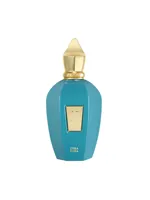
EDP · 2019
Xerjoff
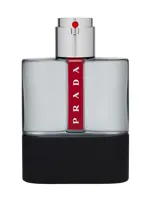
EDT · 2017
Prada
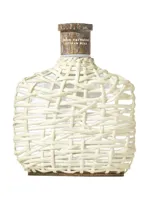
EDT · 2017
John Varvatos
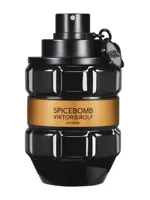
EDP · 2015
Viktor&Rolf
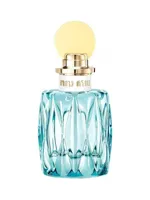
EDP · 2016
Miu Miu
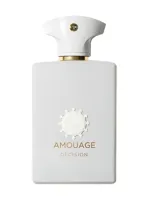
EDP · 2025
Amouage
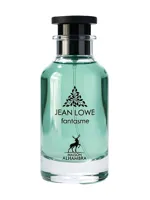
EDP · 2026
Maison Alhambra
Fresh and zesty citrus. A scientific review describes an intense fragrance and freshness, and ScenTree files it under citrus, zesty, bergamot. Linalyl acetate in the oil adds a sweet bergamot and lavender side.
Natural. It is obtained from the peel of Citrus bergamia by rasping and cold pressing the fruit, and most of it comes from the southern coast of Calabria in Italy.
Regulation (EU) 2023/1545 added it to the list of fragrance allergens, so a product containing it above 0.001 per cent (leave-on) or 0.01 per cent (rinse-off) must name it separately from 'parfum'.
New finds, honest verdicts, and price drops.
No spam. Unsubscribe anytime. See our privacy policy.