Caper names no single substance
ReconstructedNot extracted.
Note Profile
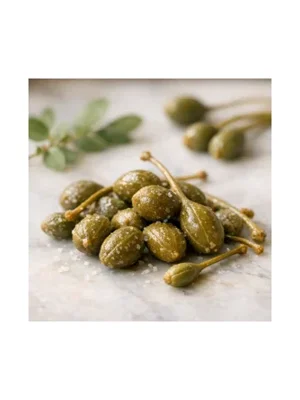
Caper is the smell of the pickled bud of Capparis spinosa, recreated with aroma molecules because the bud is rarely extracted. It smells crisp and green, with briny salt and a peppery, sulphurous mustard bite. A dry herbal note sits beneath. It opens bright and salty, then settles to a quiet salty-herbal finish.
Caper in perfumery presents a crisp, green aroma with briny mineral-salt facets and a peppery, sulphurous mustard bite - the pungency is isothiocyanate, the same chemical defence wasabi and horseradish use. A dry herbal register sits underneath it. GC-MS of the fruit oil measures thymol at 22.9-37.1%, which argues for a real thyme-phenolic, medicinal edge that the trade copy has flattened into 'green-herbal'. The note evolves from a bright, salty-green opening to a quieter salty-herbal finish, with the mineral salt outlasting the sharpness.
Read off the wheel, not a label applied to the note.
Not extracted.
Caper notes are typically recreated through aroma molecules and accords, as the actual caper bud (Capparis spinosa) is rarely directly extracted for perfumery. The olfactory impression is achieved by blending green, salty, and slightly sulfurous materials to mimic the characteristic scent of pickled capers.
Perfumers use caper as an accent in top or heart notes to introduce a distinctive green, savory twist, often in modern fougère, aquatic, or Mediterranean-inspired compositions. It pairs well with citrus, herbs, and woody notes, lending complexity and a touch of unexpected freshness.
A selection of reviewed perfumes where Caper appears prominently.
New finds, honest verdicts, and price drops.
No spam. Unsubscribe anytime. See our privacy policy.