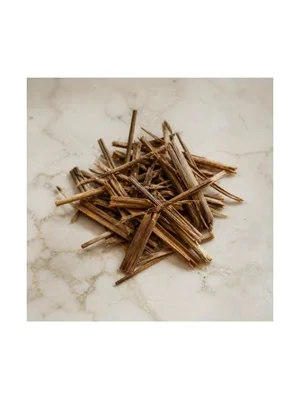
Paramela
Note Profile
About
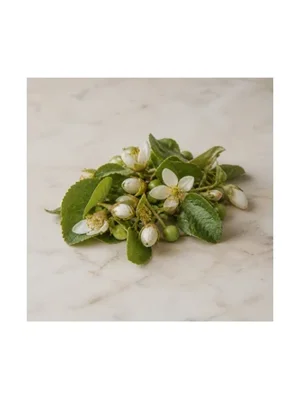
Paramela is the essential oil of Adesmia boronioides, a resinous shrub of the Patagonian Andes. It smells sweet-woody and licorice-spicy, and dries down to a musky, amber-adjacent warmth. It does not smell the way a resinous scrubland shrub is expected to smell. Both sources say so directly: it is not camphoraceous and it is not the sharp herbaceous hit of rosemary.
Scent Profile
Dry_woody leads. Both sources open with the same two words, sweet-woody, and Premiere Peau repeats them at first contact and again in the drydown. Amber_resinous sits just under it and is the more distinctive half of the material: Premiere Peau calls the drydown amber-adjacent and closer to amber than to garrigue, and Perfumer & Flavorist calls the Cashmeran-analogue compounds a natural woody and amber note. Clean_musk is the esquelenone backbone, which Premiere Peau describes as musky and warm and which both sources tie to Cashmeran's musky, sweet-woody, amber-warm profile. Warm_spice is the licorice thread, named as persistent by Premiere Peau and as a somewhat spicy note by Perfumer & Flavorist. Sweet_vanillic is the sweetness both sources report, which Premiere Peau qualifies as sweetness without sugar. Aromatic_herbal is the bright, herbal-green surface that volatilises first, plus the herbaceous geranium facet Perfumer & Flavorist names. Creamy_woody comes from the Cashmeran comparison itself, which both sources make independently; cashmere wood is the phrase Perfumer & Flavorist uses. Green is the same herbal-green opening at lower weight. Floral is the weakest of the named facets and rests on one source: Perfumer & Flavorist claims rose, freesia, orange blossom, tuberose, ylang-ylang, jasmine and geranium facets. That reads as promotional and it is scored at the naming threshold with the widest spread in the vector, 0.22.
ScentWheel
Read off the wheel, not a label applied to the note.
Origin
Adesmia boronioides, native to both sides of the Andes in Patagonia. The perfumery material comes from the area around Esquel in Chubut Province, Argentina, where local availability drove its development as a fragrance ingredient. The oil is heavy in sesquiterpenes and resin. Its characteristic molecules are the esquelenones, bisnorsesquiterpenes named after the town, which share an indanone skeleton with Cashmeran.
Usage in Perfumery
A heart-to-base modifier with natural fixative power, from the high resin and sesquiterpene content. It bridges herbal-aromatic top notes and resinous-balsamic bases. Perfumer & Flavorist reports it blending with citrus, with sweet woods such as sandalwood and drier ones such as vetiver, with basil and spices in aromatic accords, and with oakmoss, tonka bean and vanilla.
Similar Notes
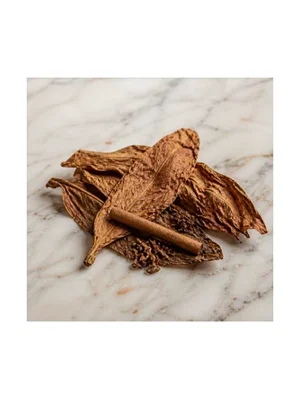
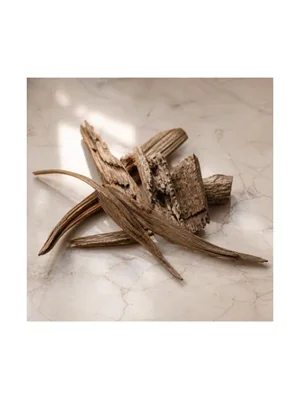
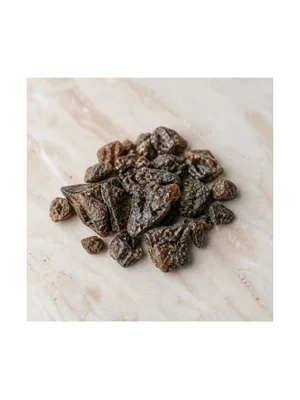
Perfumes featuring Paramela
A selection of reviewed perfumes where Paramela appears prominently.
No perfumes featuring this note have been reviewed yet. Check back soon.