

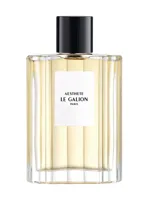
Aesthete
EDP
Le Galion
Favourite
A revived French perfume house built around Paul Vacher's classics and traditionally structured modern compositions.
Le Galion is a French perfume house founded in Paris in 1930 by Prince Murat, a descendant of Joachim Murat, King of Naples and brother-in-law of Napoleon Bonaparte. In 1935, perfumer Paul Vacher acquired the company and developed it into a major French fragrance house. His work included Sortilège, created in 1936, and Whip, introduced in 1953 as a citrus-led composition with an aromatic heart and woody chypre base.
The house changed ownership in 1980, when it was sold to a US consortium and subsequently declined. Nicolas Chabot acquired the Le Galion name and original formulas in 2014, working with Paul Vacher's daughter to revive the brand. The modern collection therefore combines reconstructed historical formulas, including Sortilège, with newer compositions. Its identity is centered on traditional French perfumery, floral-aldehydic structures, citrus and aromatic contrasts, chypre arrangements, and polished woody bases rather than a single contemporary trend.
A niche, luxury house known for floral-aldehydic compositions.
Le Galion began in 1930 under Prince Murat and became primarily associated with perfumer-owner Paul Vacher after his 1935 acquisition. The original house declined after its sale to a US consortium in 1980. Nicolas Chabot revived the name and original formulas in 2014, reintroducing historical fragrances alongside newer releases.
Le Galion is a strong choice for wearers who want structured, old-school French perfumery rather than sweet mass-market styles. Its main limitation is accessibility: the house is niche, historically oriented, and not designed for broad mainstream appeal.
Favourite - easy to wear anywhere · Statement - bold & distinctive · Acquired - bold, for fewer occasions
New finds, honest verdicts, and price drops.
No spam. Unsubscribe anytime. See our privacy policy.