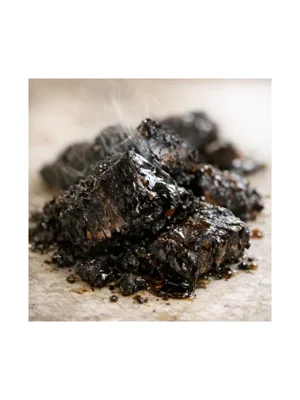
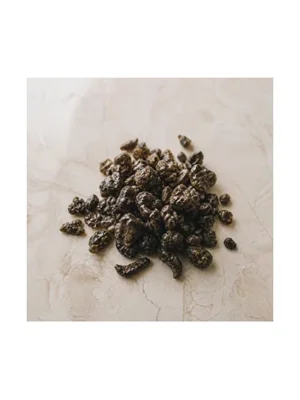
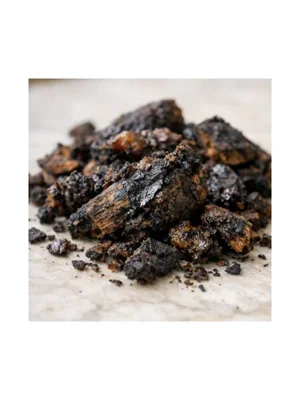
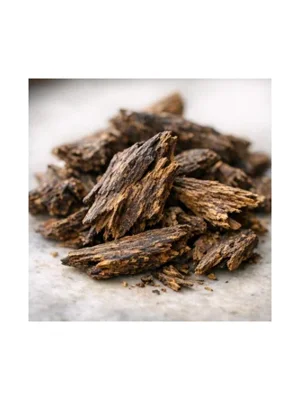
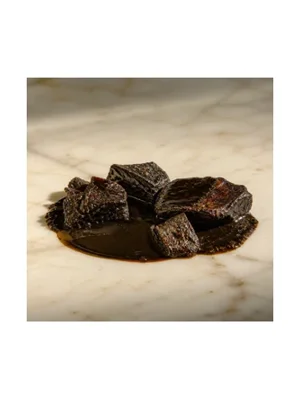
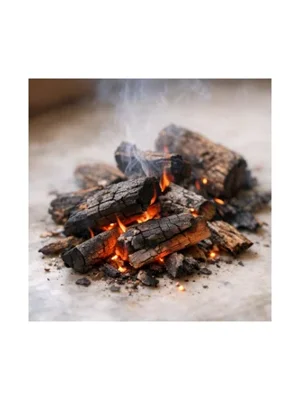
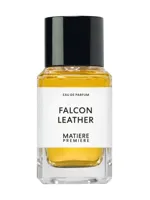
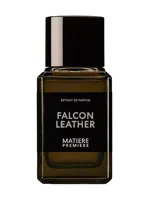
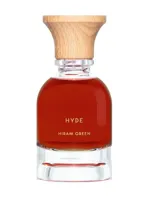
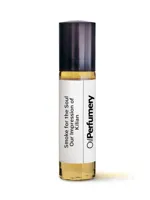
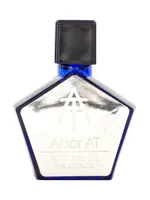
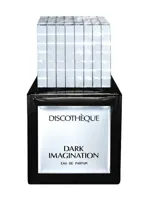
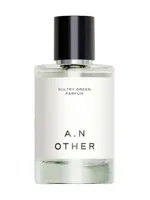
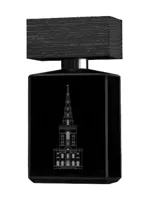
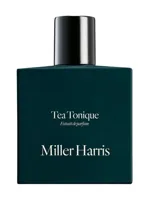
Birch tar has a powerful phenolic, smoky, leathery aroma with nuances of burnt wood, tar and creosote. The phenol leads and is the whole point of the material: the bark is destroyed rather than distilled, and guaiacol, cresols and catechol are what survive - coal-tar soap, a faint medicinal iodine undertone that outlasts everything else. Its smoke is intense and persistent but industrial rather than gentle, creosote-soaked sleepers more than a campfire. The leather it gives is raw and animalic, tanning vats and smoked hides rather than suede. As it evolves, a burnt-sugar sweetness from pyrolysis softens it into an ashen-sweet residue.
Read off the wheel, not a label applied to the note.
What this is made of
Birch tar oil, rectified
A natural extract
CAS 8001-88-5
The note names the material. Note this is distinct from the `birch` note, which is fresh green sap - the two are near-identical in our vectors today (cosine 0.9984) and that is a SCORING defect, not a reason to share an edge.
Restricted
An IFRA Standard limits how much of this a perfumer can usethe limit applies to the perfumer, not the wearer
These are facts about the substance, not about any perfume with this note.
Why that matters
A perfume that names Birch Tar can use a different extract, a
reformulated version, or a synthetic reconstruction. It can also hold less
than the amount that requires a declaration. We cannot tell which applies.
These rows cover only the substances we hold a link for.
Birch tar is obtained by dry distillation of the bark of Betula species, primarily Betula pendula and Betula pubescens, native to northern Europe and Russia. The process involves heating the bark in the absence of air to extract the dark, viscous tar. This traditional method has been used for centuries in both perfumery and leather production.
Usage in Perfumery
Perfumers use birch tar predominantly as a base note to impart smoky, leathery, and animalic facets, especially in leather accords and chypre compositions. It blends well with ingredients like labdanum, patchouli, and castoreum to create depth and complexity. Due to its potency, it is used sparingly to avoid overpowering a fragrance.
We count visits to see which pages help people and to improve the site.
No advertising, and no tracking across other sites.
Read our cookie policy
Cookie Preferences
Analytics is on unless you switch it off here. Essential cookies cannot be
disabled as they're required for the website to function.
Always On
Required for the website to function. Includes session management and security tokens.
Counts visits and which pages people use, so we can improve the site. We use
Google Analytics with its advertising features switched off, plus our own
cookieless visit counter. Switching this off stops both.